

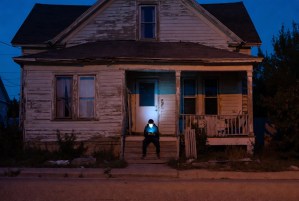
Rosedale is not a place you forget.
It’s a place that stays with you because it forces you to confront a truth most people avoid:
Poverty is not just economic.
It’s generational.
It’s cultural.
It’s inherited.
And now, it’s digital.
When I arrived in Rosedale in 2014 on an Army medical support mission, the first thing I noticed was the stillness — a kind of suspended time.
Cracked sidewalks.
Grandparents raising grandchildren.
Fractured families.
A town that felt like it had been left behind by the rest of the country.
But then I saw something that didn’t match the poverty around me.
Teenagers scrolling.
Not reading.
Not talking.
Not playing.
Scrolling.
The same thumb‑movement I’d seen in wealthy suburbs.
The same blank stare.
The same algorithmic trance.
And it hit me:
The drift had arrived in Rosedale before opportunity did.
That’s the tragedy.
A town with almost nothing had the same digital escape hatch as a town with everything — but none of the support, none of the structure, none of the safety nets.
The phone wasn’t a tool.
It was anesthesia.
I watched teenagers drift through their days, scrolling through lives they would never live, comparing themselves to worlds they would never enter, numbing themselves with the same algorithms that numb kids in wealthy neighborhoods — but without the resources, the guidance, or the stability to counterbalance it.
Poverty + drift = a new kind of trap.
A trap where:
- boredom becomes scrolling
- scrolling becomes escape
- escape becomes habit
- habit becomes identity
- identity becomes limitation
And the cycle repeats.
Rosedale showed me something I didn’t expect:
poverty in America and poverty abroad share the same digital wound.
In Haiti, I saw children with nothing — but they still found joy in each other.
In Rosedale, I saw children with nothing — but they found escape in a screen.
Two different worlds.
Two different histories.
Two different struggles.
But the same drift.
The same escape.
The same hunger for ease.
Rosedale didn’t just show me poverty.
It showed me what happens when the world arrives before opportunity does.